- CARPENTER ANT BIOLOGY
- WHAT DOES A CARPENTER ANT NEST LOOK LIKE?
- WHAT ARE CARPENTER ANT SWARMERS?
- HOW TO TREAT CARPENTER ANTS IN THE HOME
- HOW TO TREAT CARPENTER ANTS OUTSIDE THE HOME
- WHERE DO CARPENTER ANTS LIVE OUTSIDE?
- BEST YARD SPRAY FOR CARPENTER ANTS
- BEST CARPENTER ANT BAIT FOR THE YARD
- BEST WAY TO DIRECTLY TREAT A CARPENTER ANT NEST
- WHAT IS CARPENTER ANT FRASS (SAWDUST)?
- HOW TO DUST A CARPENTER ANT NEST
- WHY IS DRIONE DUST A GOOD PRODUCT FOR CARPENTER ANTS?
- CARPENTER ANT TREATMENT SUMMARY
- Contact Us
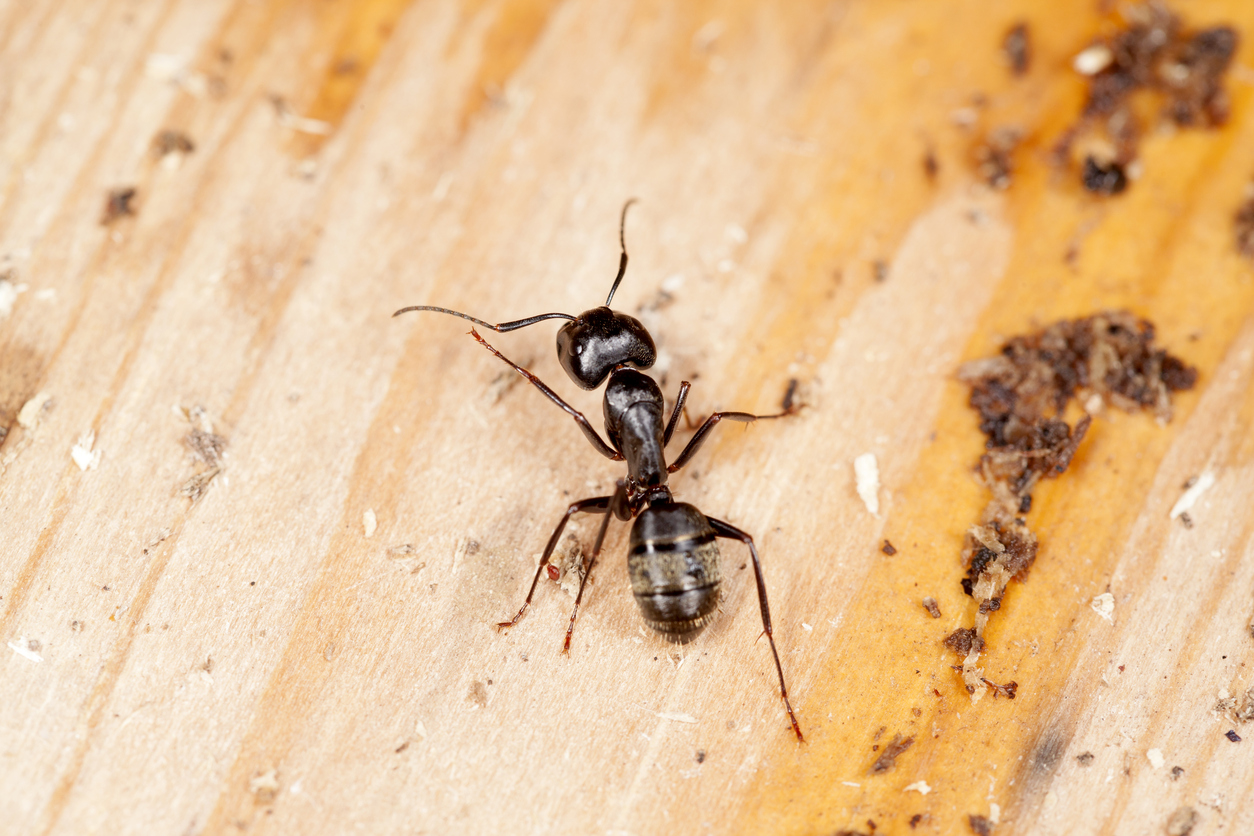
Carpenter Ants are one of the largest ants we have in the United States. Their range is throughout the entire country. Typically you’ll know you have carpenter ants because you’ll start noticing large, black ants foraging randomly on or around the home.
But carpenter ants don’t have to be black. Florida carpenter ants are reddish brown. And the yellow carpenter ant is a dull, off orange yellow color.
CARPENTER ANT BIOLOGY
^
Carpenter Ants are unique and different from most other ants. Regardless of which carpenter ant you have, their characteristics will include:
The use of scent trails that can reach several hundred feet. These trails enable the ants to forage far and wide yet still get home safe.
Naturally nocturnal, carpenter ants will prefer to work when it’s dark.
Carpenter ants typically chew on wood as they create nests. This chewing can cause a range of damage.
Carpenter ants are general well in tune with the local environment and naturally drawn to moist, damp voids and spaces.
An ability to avoid chemically treated areas and find new ways into a structure.
In general, carpenter ant nests will “shut down” outside as winter arrives. But if nests reside on a structure, they can be active all winter long. In early spring, workers will get early even when it’s still cold outside attempting to find food and get their nests up and active again.
WHAT DOES A CARPENTER ANT NEST LOOK LIKE?
^
Carpenter ants typically set up a series of nests which can span several yards. These nests will be “linked” together forming an intricate network. You know you are close to a nest if you see adult ants foraging with egg sacs.
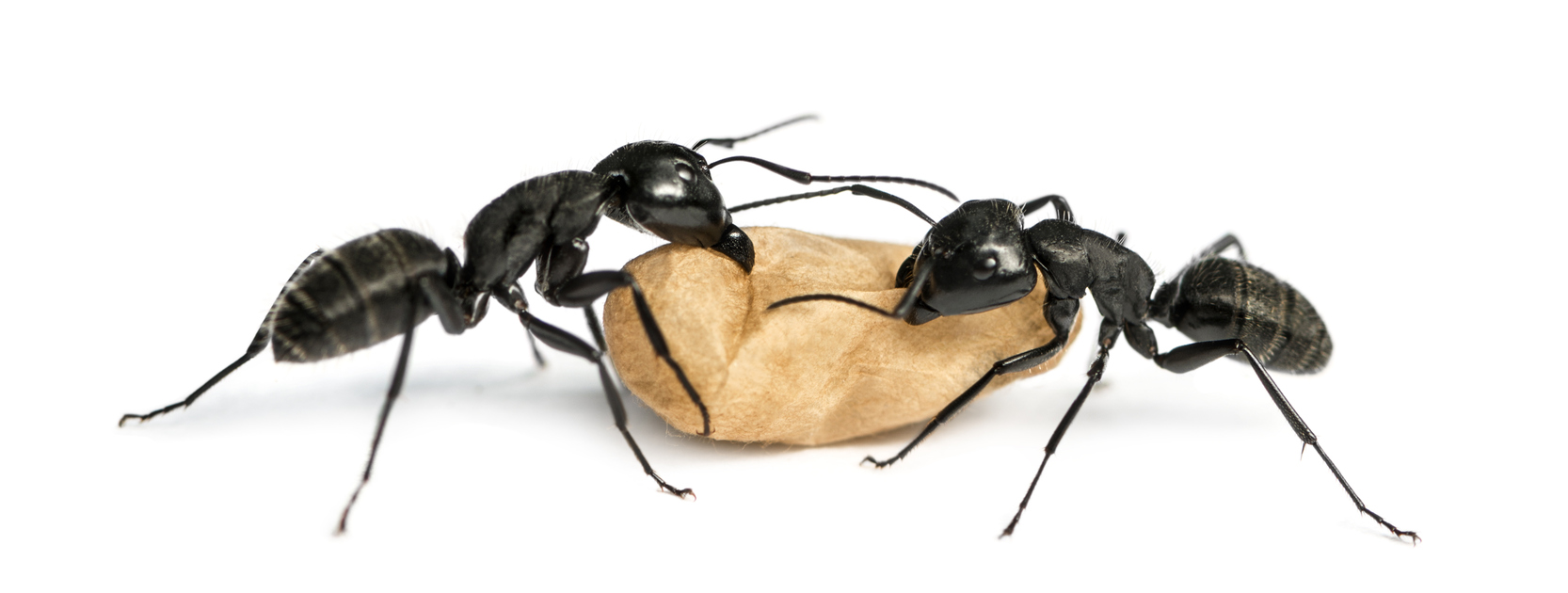
This network of nests can be in series enabling foraging workers and scouts to have a safe haven when out and about doing their chores. This structure also helps to preserve any one colony because it’s rare that all the members will ever be in one location at one time. Should any one “satellite” nest be destroyed, the other nests will usually have enough members left to enable the colony to move on and survive.
This is also why controlling carpenter ants can sometimes be a difficult job. If you only get 1-2 of their nests but miss even one satellite colony, they might be able to rebound and rebuild. The following video demonstrates just how determined and agile these ants can be. This footage was taken of a colony that was in the midst of relocating their nest. Recent rains
The following video demonstrates just how determined and agile these ants can be. This footage was taken of a colony that was in the midst of relocating their nest. Recent rains were flooding their nests and they were prepared to move up and out of the water. When moving they’ll grab eggs and pupae thus insuring their survival.
^
Another sign you have a carpenter ant infestation is if you happen to find a lot of large black ants with wings. Like most any ant, carpenter ants generate “swarmers”, or winged reproductives, whose sole purpose is to leave an existing nest to fly away and land somewhere to start a new nest. These swarmers tend to be released during the spring but may be found at any time. If you’re finding these in the home, chances are there is a nest located somewhere on the structure.
Keep in mind TERMITES also generate swarmers as do a range of small ants. But carpenter ant swarmers are quite large and hard to mistake.
The following video shows an actual carpenter ant nest that was created in a deer feeder just outside a home. From this nest the ants could invade several homes and cause all kinds of problems. More importantly, if left untreated, these carpenter ants would undoubtedly create many more nests. Watch carefully and you’ll be able to see swarmers, the ones with wings, as well as different sized workers.
HOW TO TREAT CARPENTER ANTS IN THE HOME
^
If you are seeing more than 1 carpenter ant a month in your home, there is a good chance you have a nest located inside. Although you will most likely be compelled to spray something, don’t. Traditional products will only compound the problem. This happens because the ants you see represent less than 5% of the actual colony. And traditional products will only repel the ants elsewhere so you won’t get control.
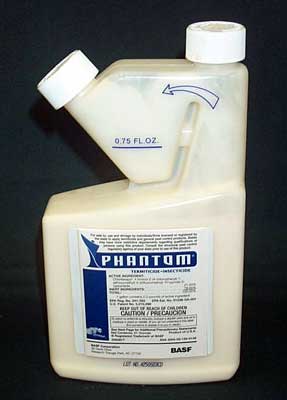
But what you can spray is a nonrepellent aerosol and concentrate that won’t “spook” or chase the ants. This active comes in two forms; PHANTOM AEROSOL and PHANTOM CONCENTRATE.
Both can be used safely in the home and both have a unique way of affecting ants. Basically the active is not detectable by target pests so they’ll continue to walk over the treatment. During this time they’ll be picking up small amounts which are then brought back to their colony where the active is “shared” with other members of the nest.
Phantom doesn’t work fast but after 2-3 days, it will start to kill affected ants. Since so many will have been exposed by then, the nests will begin to die and within 2-3 weeks, the problem should be resolved.
Use the Phantom Aerosol in any room by injecting all cracks and crevices where you see ants active. Be thorough and expect to use 1/4 to 1/2 of the can for your initial application.
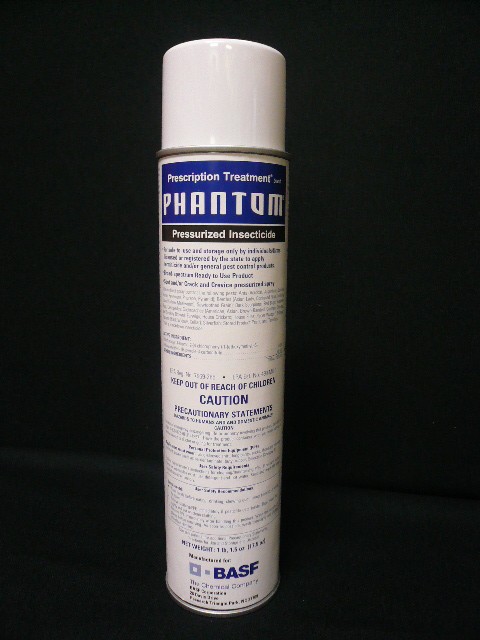


Phantom aerosol is ideally suited for spraying up off the floor. But for the baseboards, Phantom concentrate is recommended. Mix 1.5 oz per gallon of water and expect to apply 1-2 gallons of spray to get the home properly treated.
Any good PUMP SPRAYER can be used to make the application. Just make sure it has a good tip that provides a nice flat fan pattern like our private label commercial sprayer.

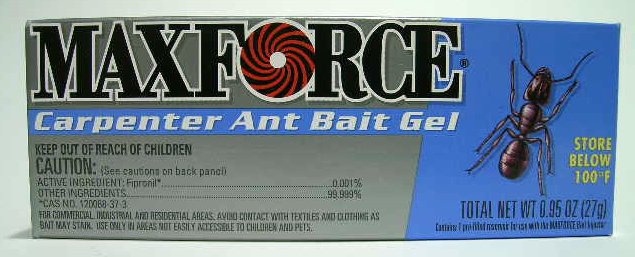
Lastly, if you see carpenter ants foraging into cabinets, pantries, closets or other hard to spray sensitive areas, apply CARPENTER ANT GEL. This product can be used without having to remove anything from the cabinet. It uses real plant honey dew as the attractant and like Phantom, an active ingredient ants won’t notice. They’ll readily feed their young who in turn release the food as fecal matter a few days later. This fecal matter will have live active chemical in it (thanks to the larvae’s digestive track) which in turn will kill all adult and young ants. This process will take 1-2 weeks so be sure to keep placements fresh when ants are seen.
HOW TO TREAT CARPENTER ANTS OUTSIDE THE HOME
^
Since carpenter ants originate from the yard, it’s recommended you treat around the home. This ensures you get active nests “linked” to nests inside and in doing so, keep them from coming back to living spaces. Remember, since carpenter ants “network” their nests, its just a matter of time before the outside connections try to repopulate the inside communities.
WHERE DO CARPENTER ANTS LIVE OUTSIDE? ^
Unfortunately, carpenter ants could be nesting most anywhere. Common nest sites include trees, old stumps, fences and even the ground. If you go outside and walk around your yard for 15-30 minutes in late morning or just before dark, there is a good chance you’ll spot carpenter ants foraging somewhere. And even if you find just one, take time to study what it does, where it goes and now it behaves. With any luck, it will reveal where a nest is located and it just takes one ant to “give away” their secret spot!
BEST YARD SPRAY FOR CARPENTER ANTS ^
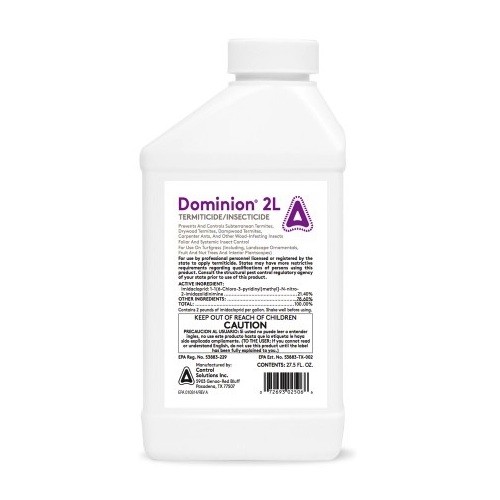
Now if you get lucky and uncover a nest site, great. But even if you don’t, spray DOMINION 2L over the turf, mulch, shrubs and trees. Dominion is a non-repellent which means it won’t be detected by foraging ants. Like Phantom, ants will walk over the treatment, pick some of the active up and bring it back to their nest where the agent will be spread throughout the inhabitants. Within 2-3 days, the treatment will have infiltrated the nest and when it kicks in and starts to work, it will be too late for the affected ants.
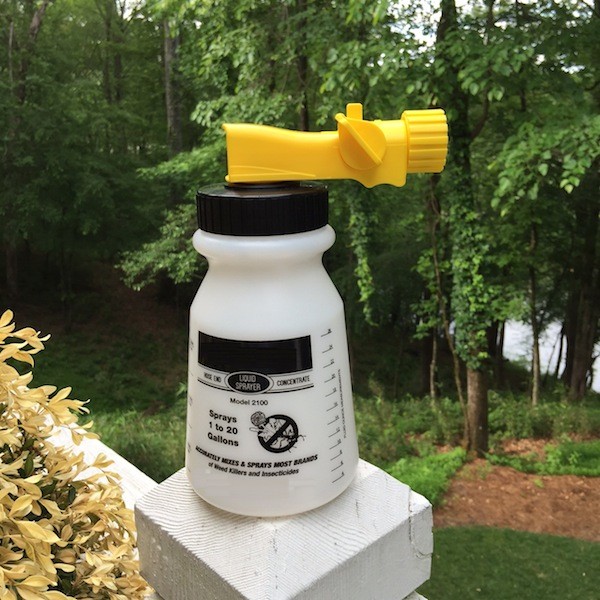
Dominion should be applied at the rate of 1/2 oz per 1,000 sq/ft. So if you have a quarter acre yard, mix up 5 oz in our HOSE END SPRAYER, fill it half way and hook it to your garden hose. Next, spray the entire contents over the 1/4 acre and let the treatment dry before walking in the yard. This ensures the treatment has a chance to properly dry.
Each jug is enough to treat over an acre and treatments are good for 2-4 weeks.
You can use a standard PUMP SPRAYER but if the yard is 5,000 sq/ft or more, our 20 GALLON HOSE END SPRAYER is the preferred way to apply Dominion. This ensures you use enough water.
BEST CARPENTER ANT BAIT FOR THE YARD ^
Once the yard is sprayed with Dominion, wait at least one day and then apply CARPENTER ANT GRANULES around the perimeter of the yard. This material is highly attractive to carpenter ants and applying some around trees, bushes and other places carpenter ants might like to visit, you’ll have another agent ready to work at keeping their numbers minimalized. So between the Dominion and the bait, you won’t have ants active in the yard.

BEST WAY TO DIRECTLY TREAT A CARPENTER ANT NEST
^
Now if you get really lucky and spot a nest, directly treating it can be both rewarding and highly effective. The key here is knowing where the nest is located. This can be tricky.
One thing you can do that will really help find these locations is to spend some time trying to figure out where carpenter ants might be nesting. And remember, there could be several nests. Rare is the time when only nest exists; many times there are signs of ant activity but you must know where to look and when following a trailing ant, remain calm and distant. If they get any clue they’re being followed, they’ll stop using their trail and instead, walk elsewhere. This natural defense makes it ever difficult to locate their nests and why it can be frustrating when dealing with this pest.
HOW TO TRACK CARPENTER ANTS BACK TO THEIR NEST ^
The good news is it can be done and the following video will help explain how.
WHAT IS CARPENTER ANT FRASS (SAWDUST)? ^
While active in the yard, pay attention to any “sawdust” or soft wood on trees or fence posts showing unusual signs of damage. If you’ve already found “frass” or wood shavings outside or in the home, there is a good chance a carpenter ant nest is close. Since these ants do not travel in large numbers, don’t expect to see a big trail. As stated above, it just takes one ant to “tell” you where a nest is located. And if you suspect you’ve found their home, consider using a dust for quick and immediate control.
Now if by chance you locate what you believe to be a nest, consider dusting it for quick control and immediate results.
HOW TO DUST A CARPENTER ANT NEST ^
For immediate control of a local nest, dust is highly effective and in most cases, more direct compared to using a liquid. This is true because the dust will float around and cover all galleries, nooks and cranny’s where ants might be and where liquid cannot reach.
The best dust for the job is DRIONE DUST . This formulation is easy to work with and its “dehydrating” impact will kill all stages of carpenter ants within a few minutes. Drione works by cutting through an insects exoskeleton which leads to the rapid loss of moisture vital to most insects. Once dusted, they’ll try to move away which only hastens the impact. Within a few minutes, ants with just a little dust on them will submit to the injury and die.
For 1-3 nests, the small 6 oz jug will be enough but if you intend on dusting up under the homes siding, treating several wall voids or an entire attic, you’ll need 1 lb or more.
To apply Drione, you’ll need a good HAND DUSTERS. These are designed to hold a few ounces of dust and then by squeezing the body of the duster, you’ll be able to inject the Drione up under siding, through holes and into the heart of their nest.
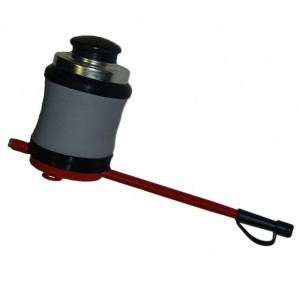
Drione is light and penetrates well into any space it is applied.
WHY IS DRIONE DUST A GOOD PRODUCT FOR CARPENTER ANTS? ^
There are many reasons and the following video goes over all the features of Drione which make it the best option for directly treating an active nest.
HOW TO TREAT A CARPENTER ANT NEST WITH DRIONE DUST ^
To see why Drione is such a good choice for directly treating a known carpenter ant nest, watch this video:
CARPENTER ANT TREATMENT SUMMARY ^
If you are reside in a region where there are a lot of carpenter ants, you should address the outside treated with Dominion and bait with Advance Carpenter Ant granules to keep their numbers in check.
If you occasionally see one or two ants in the home throughout the warm season and into the winter, be sure to bait inside with Carpenter Ant Gel to keep them from establishing a nest. If you’re seeing 1 or more a week, use the gel but also spray with Phantom Aerosol.
If you know the exact location of a nest either outside or in the home, dust with Drione for fast control. This product will knock the carpenter ant nest out immediately and provide the fastest results. More important, once Drione is applied to any void, it will remain active for 6-12 months.
Carpenter ants are a major pest in the United States. If left untreated, they will chew through wood causing untold damage. Since carpenter ants forage great distances and use “nest networks” to ensure survival like to have several nest locations, it’s not easy to control local infestations unless you follow the treatment outlined above.
Contact Us ^
Give us a call toll free 1-800-877-7290 if you need further help. We’re open Monday through Thursday, 9:00 AM to 6:00 PM. On Friday, 9:00 AM to 5:00 PM and on Saturday, 9:00 AM to 2:00 PM (Eastern Standard Time).
Email questions here: http://www.bugspray.com/about-us/contact-us
Order online and get a 5% discount! We ship fast with 99.9% of all orders shipping within 1 business day!!
Learn more about BUGSPRAY.COM and why it’s never been easier or safer to do your own pest control.
Please show your support for our business by purchasing the items we recommend from the links provided. Remember, this is the only way we can stay around to answer your questions and keep this valuable web site up and running. Thanks for your business!